Apatani Women : Memory and Identity
Documentary Photography Project | Northeast India
Apatani — Women, Memory and Identity is a long-term documentary photography project developed among the Apatani people of Arunachal Pradesh, in Northeast India.
Through portrait photography, the work explores the relationship between women, cultural memory, and the persistence of ancestral identity in a time of gradual transformation.
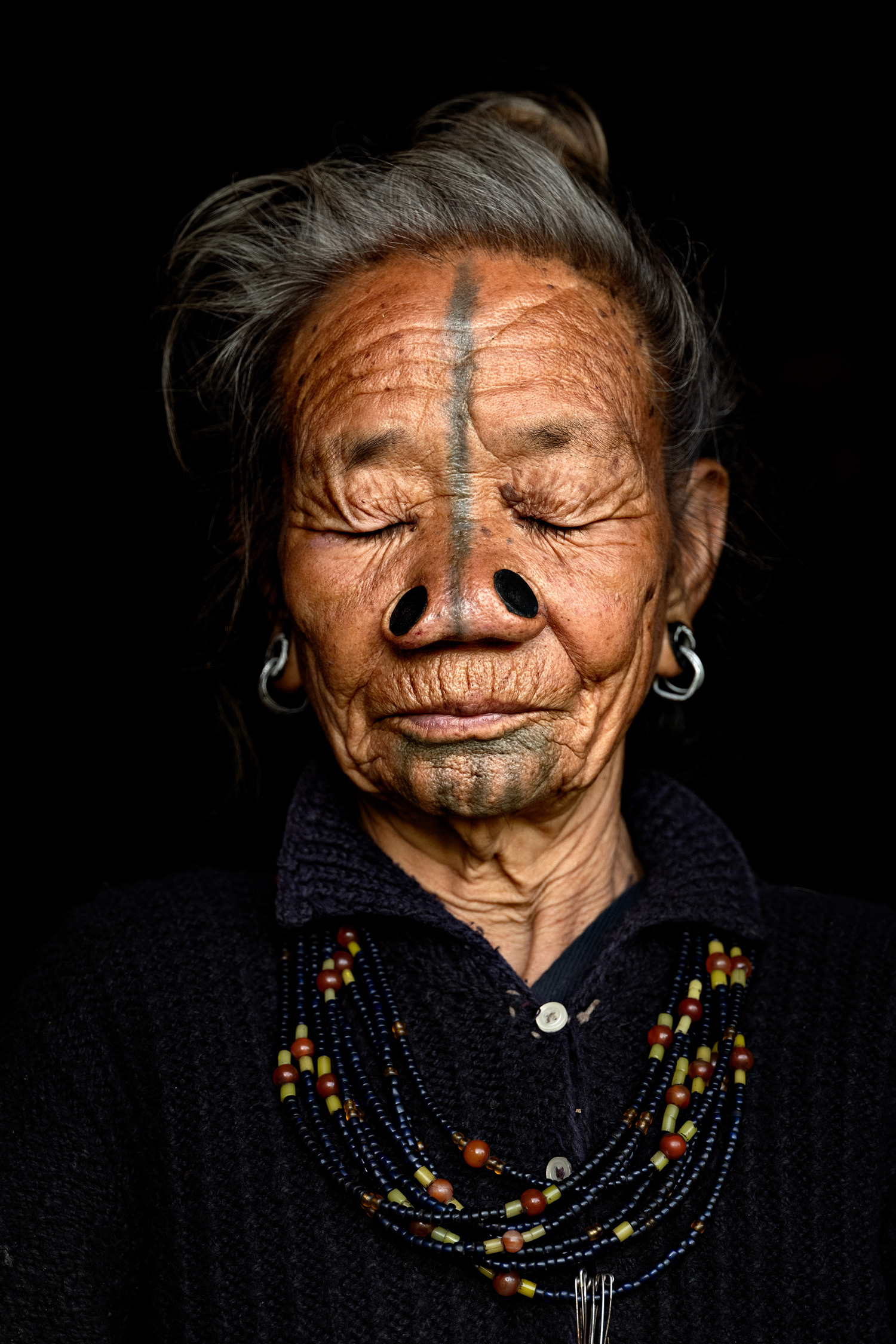
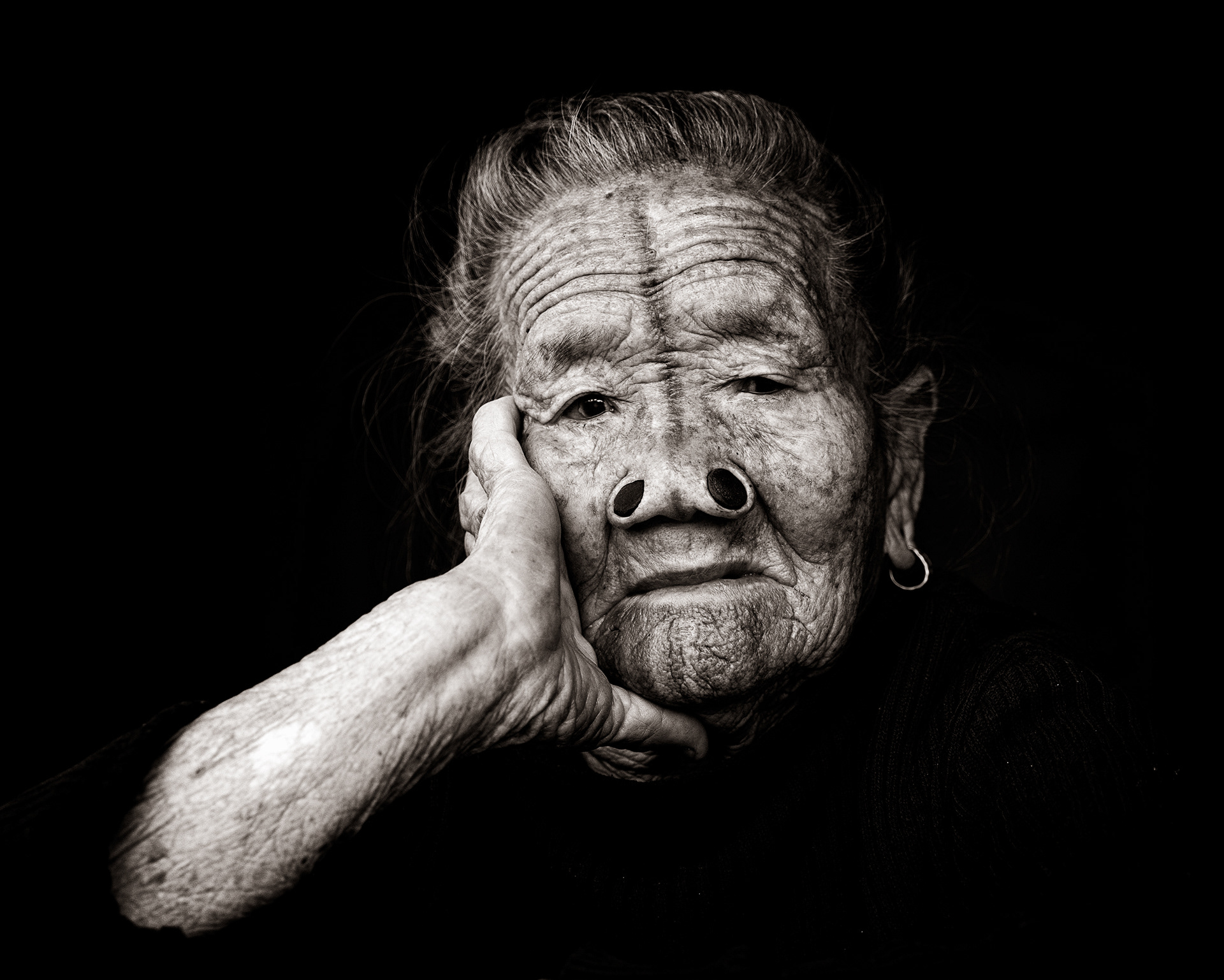
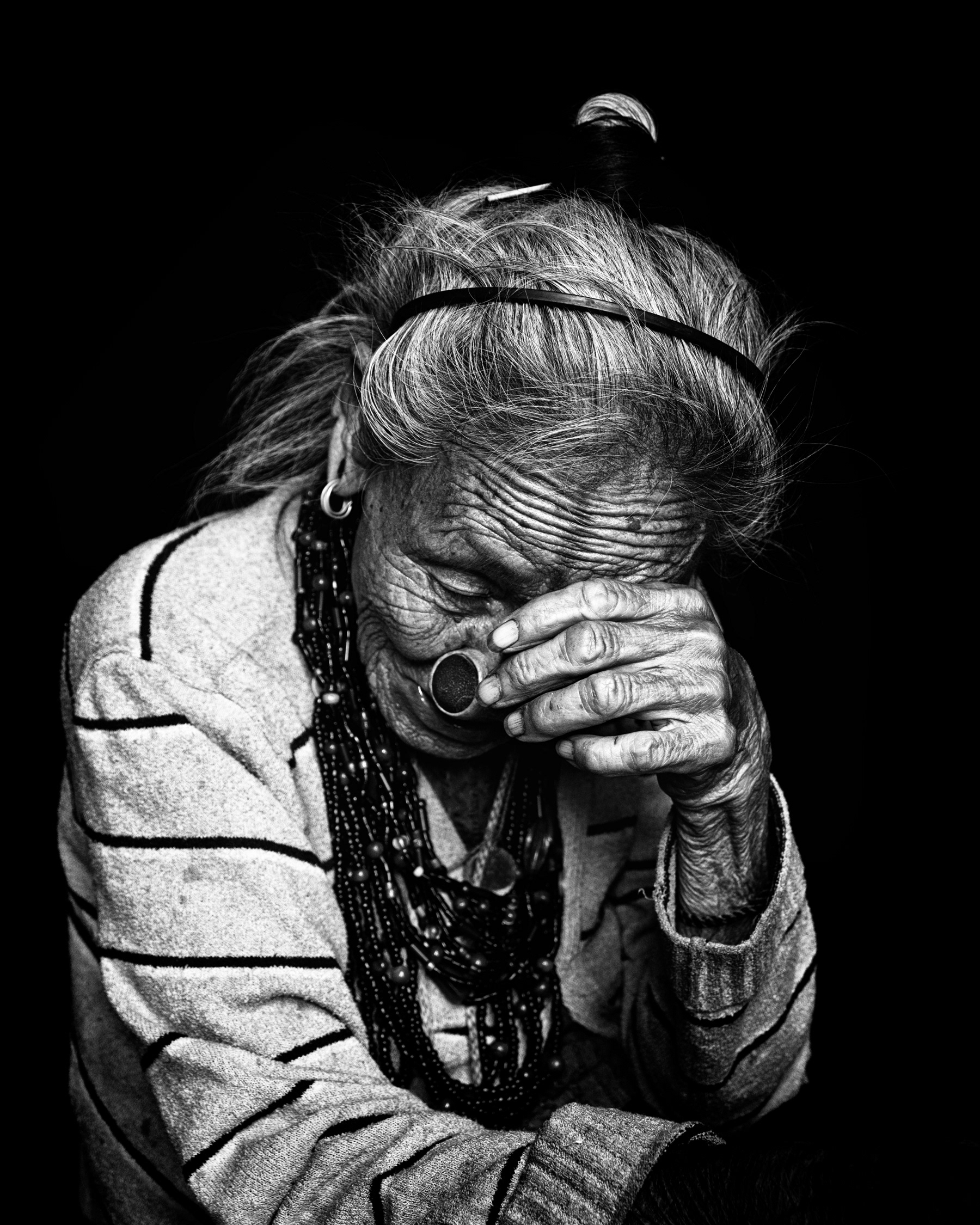
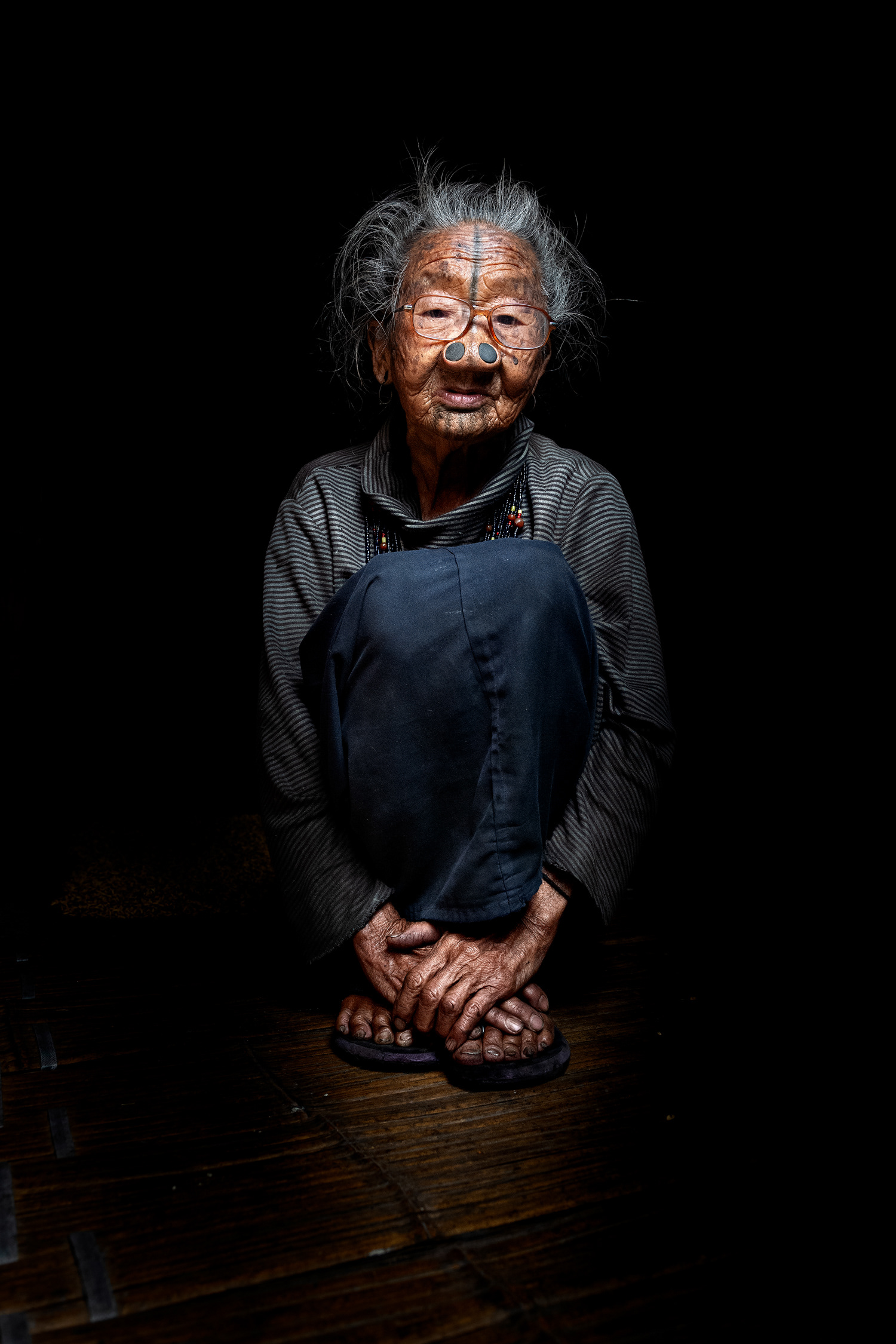
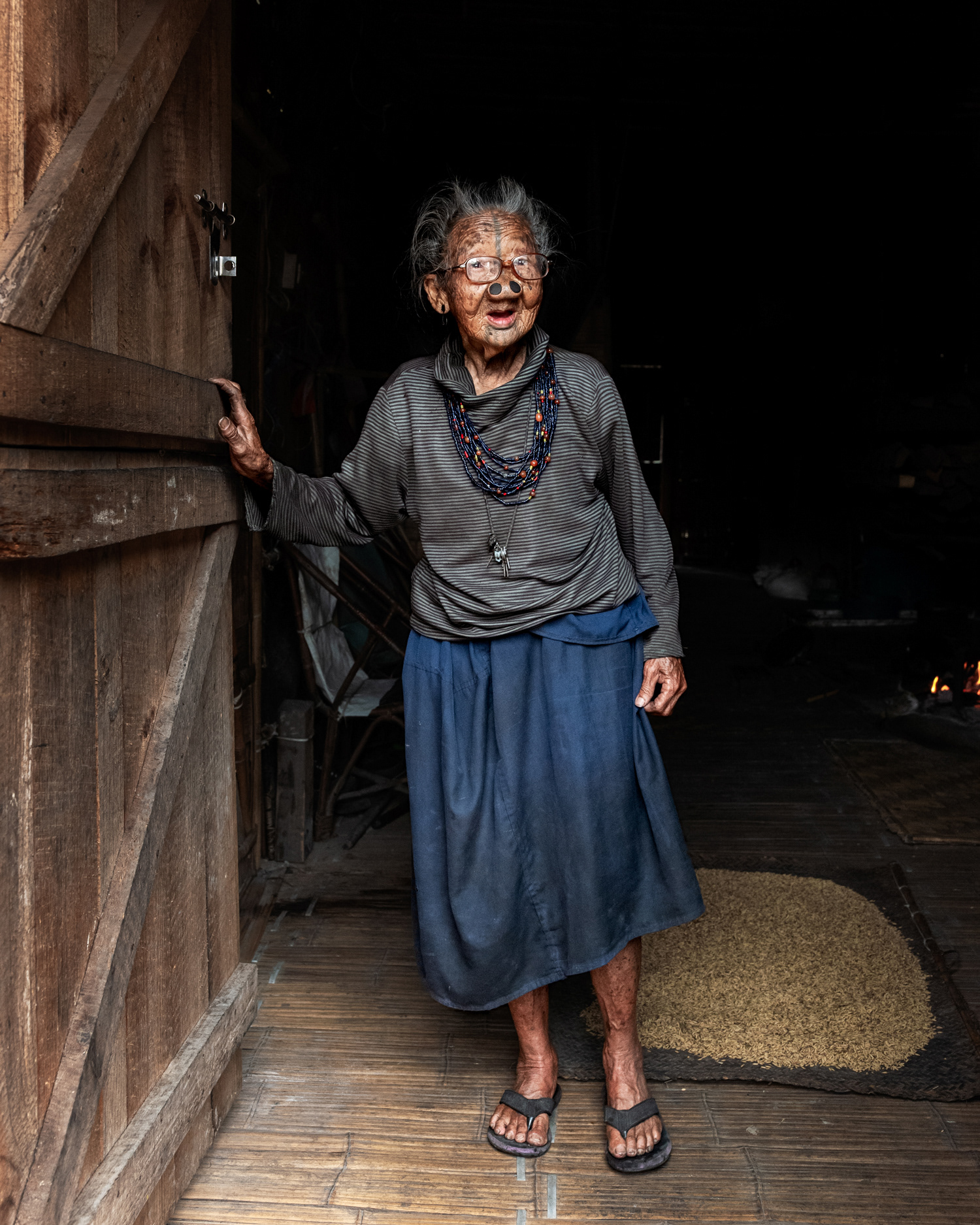
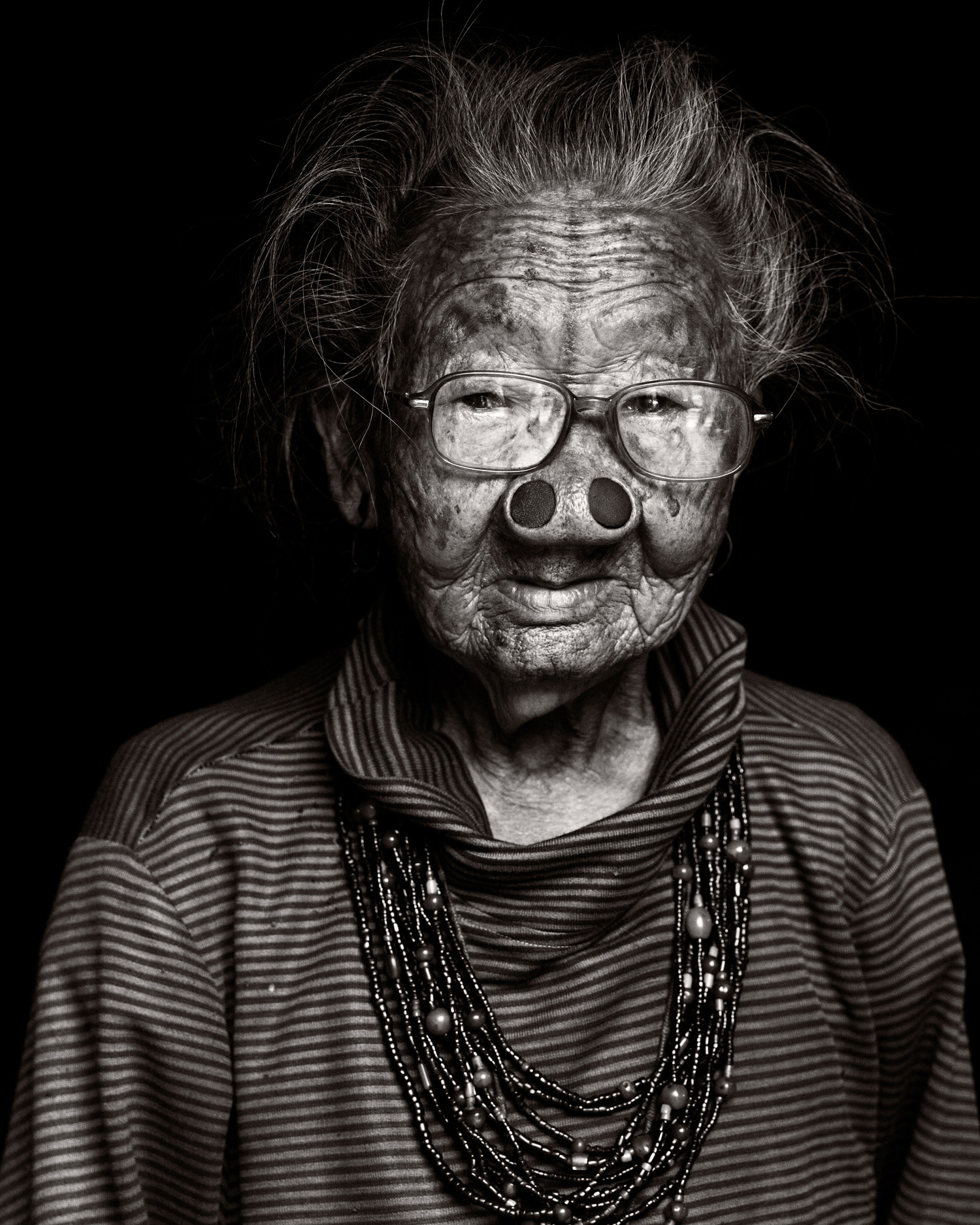
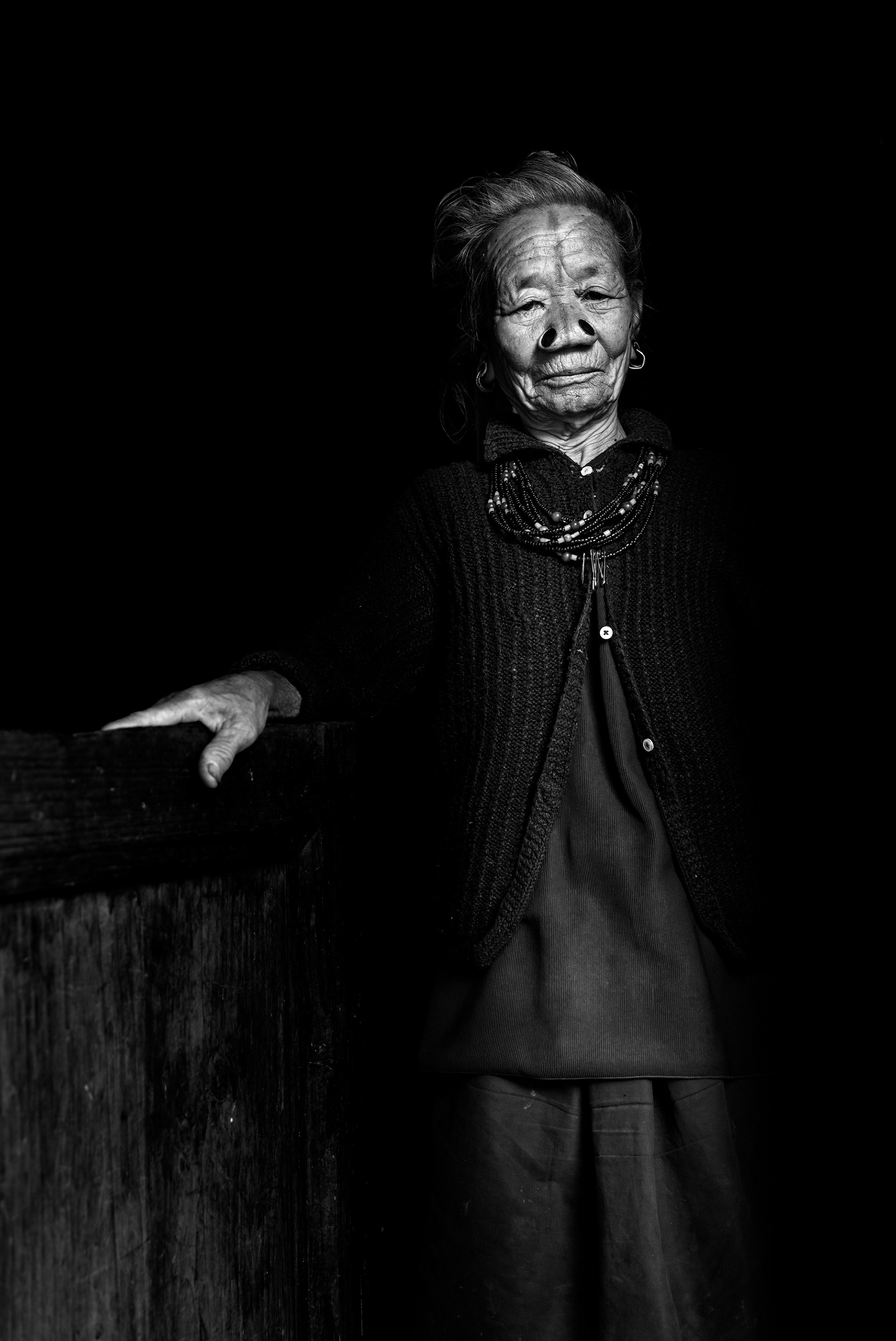
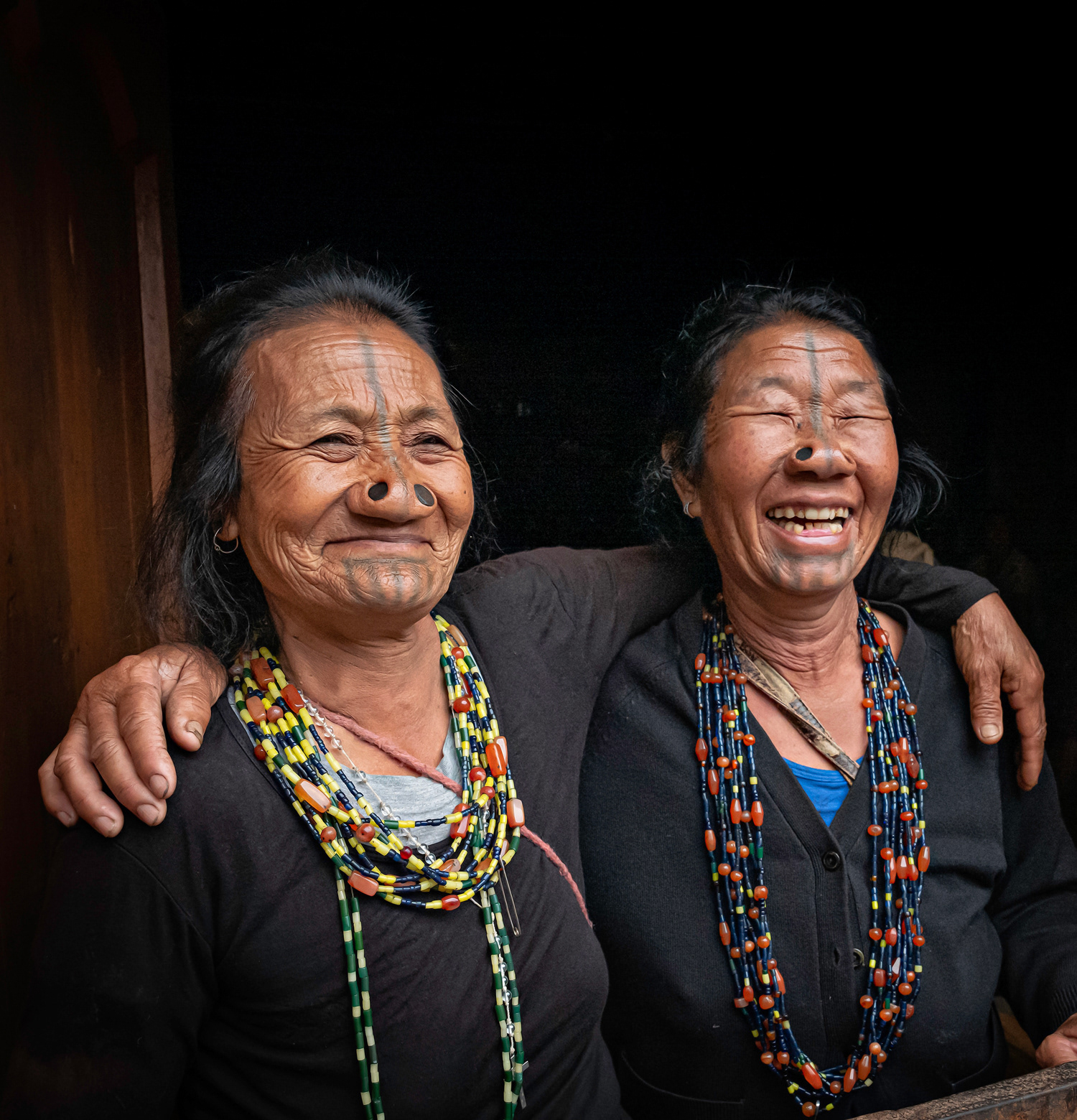
The Apatani are an Indigenous community whose visual traditions have long been inscribed on the body. Among elder women, facial tattoos and nose plugs remain visible signs of belonging, history, and continuity. These marks are not decorative elements, but living traces of a cultural system in which identity was carried, protected, and transmitted through generations.
Cultural Memory and the Female Presence
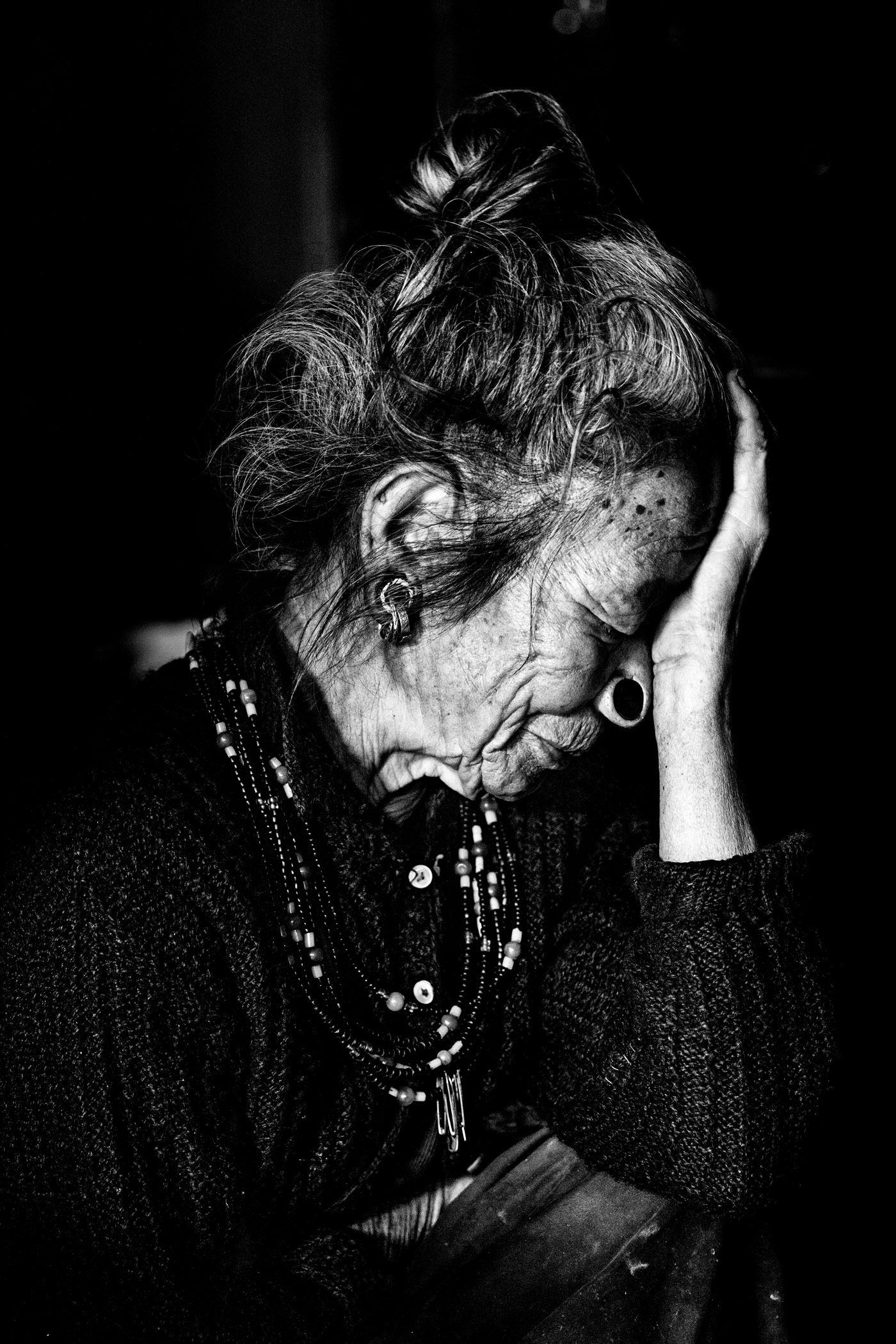
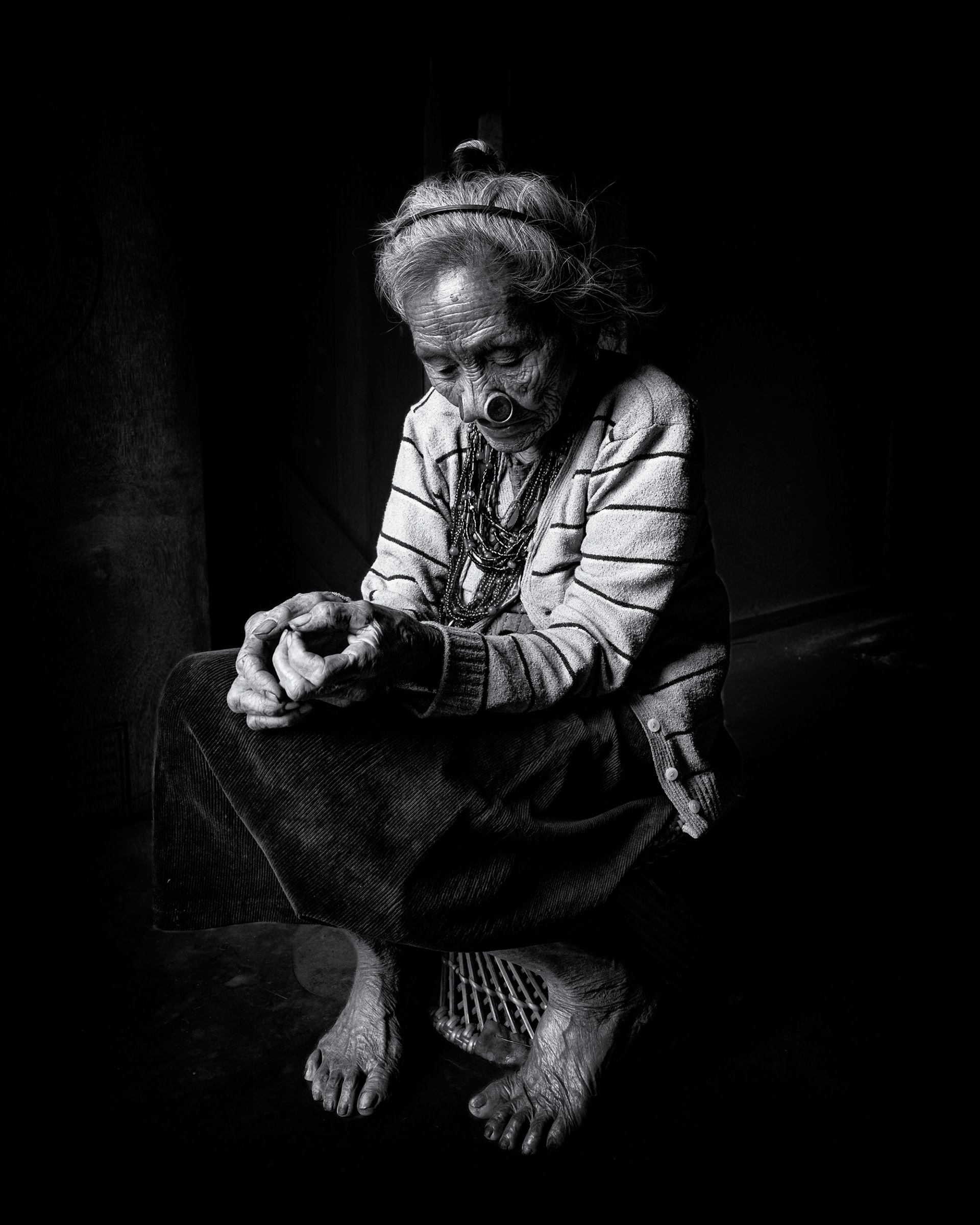
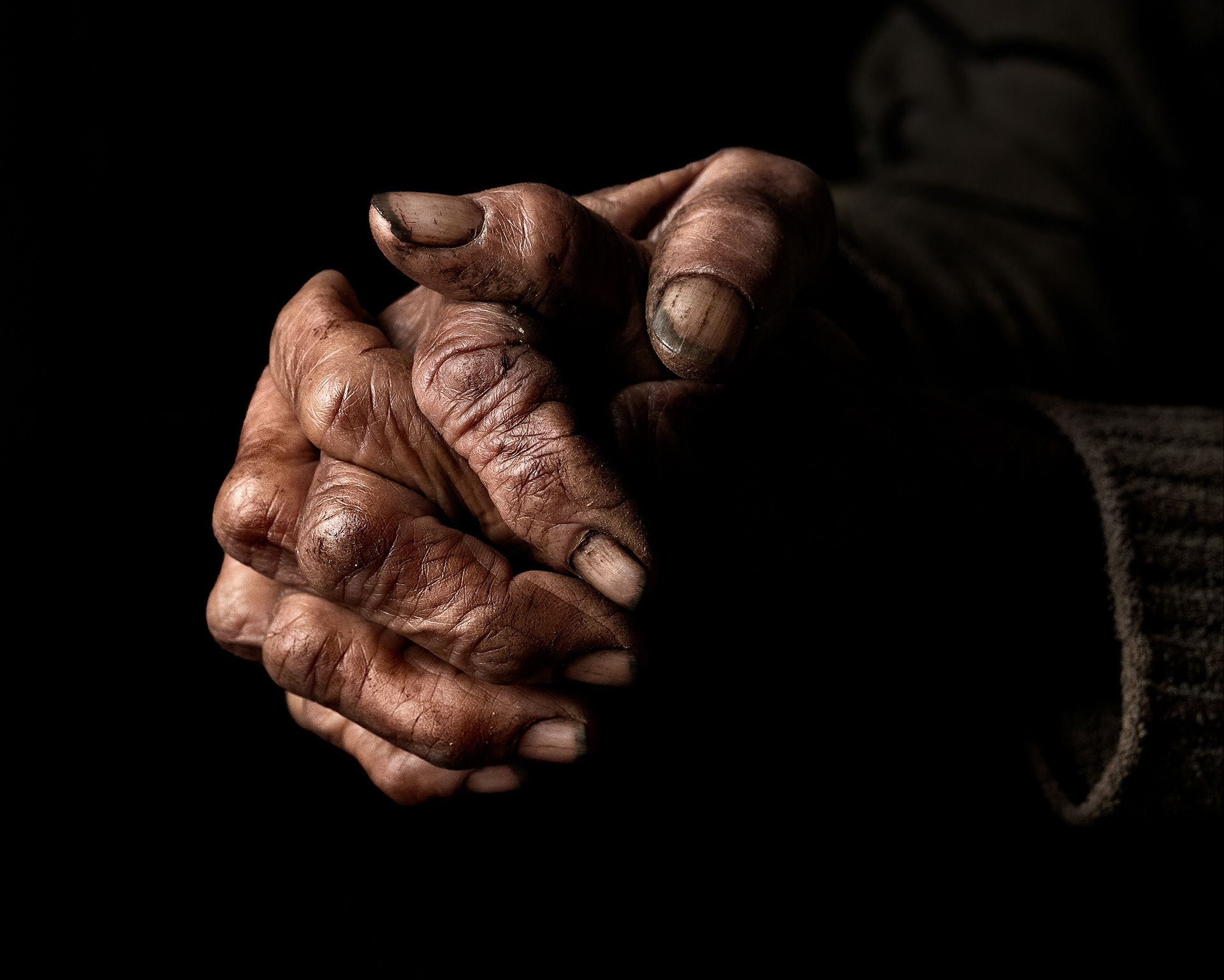
The portraits in this project were created within a context of proximity and listening. The women photographed are not presented as symbols, but as individuals whose faces carry time, experience, and memory. Wrinkles, gazes, and silences become a visual language through which stories of loss, resilience, and transformation emerge quietly — often without the need for words.
Photography here does not aim to describe a culture from the outside, but to remain close to the presence of those encountered. The camera becomes a witness, attentive to gestures and expressions, allowing cultural memory to surface naturally rather than being staged or emphasized.
Between Generations: Change and Continuity
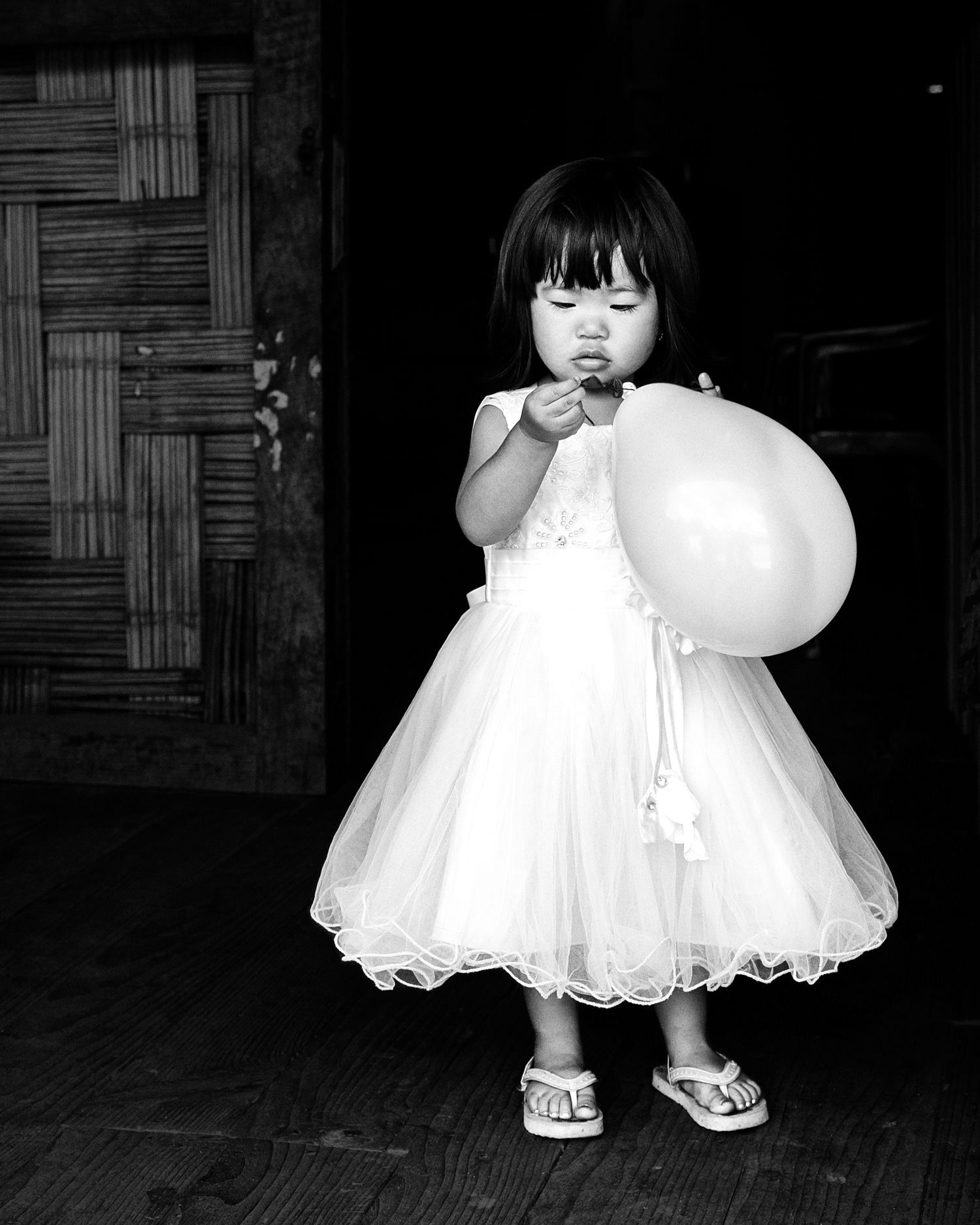
Today, younger Apatani generations no longer bear traditional facial tattoos or nose plugs. This absence marks a visible shift in identity and reflects the broader changes affecting Indigenous communities across the region. Customs fade, adapt, or disappear, while new forms of belonging slowly take shape.
Within this transition, moments in which granddaughters stand beside their elders reveal a fragile yet meaningful bridge between past and present. These encounters suggest continuity not as preservation, but as transformation — a space where memory and becoming coexist.
Documentary Photography as Witness
Through this documentary photography project, portraiture becomes a tool for witnessing rather than explaining. The work seeks to hold together fragility and dignity, intimacy and distance, personal history and collective identity. What remains central is the encounter itself — shaped by time, patience, and mutual recognition.
Even as traditions evolve, the cultural identity of the Apatani continues to endure, carried not only by visible signs, but by presence, memory, and the quiet strength of those who embody it.